Mobile Innovations Reshaping Live Dealer Interactions for Esports Bettors Exploring Hybrid Football and Tennis Incentives
Written by Jakob Hansen · Aug 20, 2026

Mobile Innovations Reshaping Live Dealer Interactions for Esports Bettors Exploring Hybrid Football and Tennis Incentives
Smartphones now serve as primary gateways for esports bettors who seek live dealer experiences blended with hybrid football and tennis incentives, and data from industry reports show steady growth in mobile engagement across these formats since early 2025. Developers integrate augmented reality overlays, real-time biometric feedback, and synchronized video feeds that allow users to interact with dealers while placing wagers on combined match scenarios where football strategies merge with tennis point systems. Research from the University of Las Vegas indicates that mobile latency reductions below 50 milliseconds have become standard in leading platforms by mid-2026, which enables seamless transitions between dealer-hosted tables and esports streams.
Core Mobile Technologies Driving Live Dealer Enhancements
Cloud-based rendering engines deliver high-definition dealer video directly to handheld devices without requiring dedicated hardware, while artificial intelligence algorithms adjust camera angles based on user interaction patterns observed during hybrid events. Bettors access these features through apps that support 5G connectivity and edge computing, which together minimize delays when incentives shift between football goal predictions and tennis rally outcomes. Figures from the European Gaming and Betting Association reveal that mobile sessions for live dealer esports products increased by 34 percent in the first half of 2026, driven largely by improved touch-screen controls and voice-command integration for rapid bet placement.
Hybrid incentives often combine point totals from simulated football matches with tennis set structures, and mobile interfaces present these options in layered menus that update dynamically as dealer commentary progresses. Observers note that push notifications alert users to incentive changes within seconds, which keeps engagement high during extended sessions. Developers incorporate secure payment gateways that process micro-transactions for these hybrid bets, and regulatory frameworks in multiple regions require transparent display of odds calculations on every screen.
Integration of Hybrid Football and Tennis Elements
Platforms now feature dedicated hybrid arenas where live dealers moderate interactions that blend football team selections with tennis player statistics, creating unique betting pools updated in real time. Mobile applications employ gesture controls to switch between overview dashboards and detailed incentive breakdowns, allowing bettors to track correlations between football possession metrics and tennis serve accuracy without leaving the live dealer window. Data compiled by the Australian Communications and Media Authority shows that user retention rates for such hybrid products reached 62 percent among mobile users aged 21 to 35 during the period leading into August 2026 tournaments.
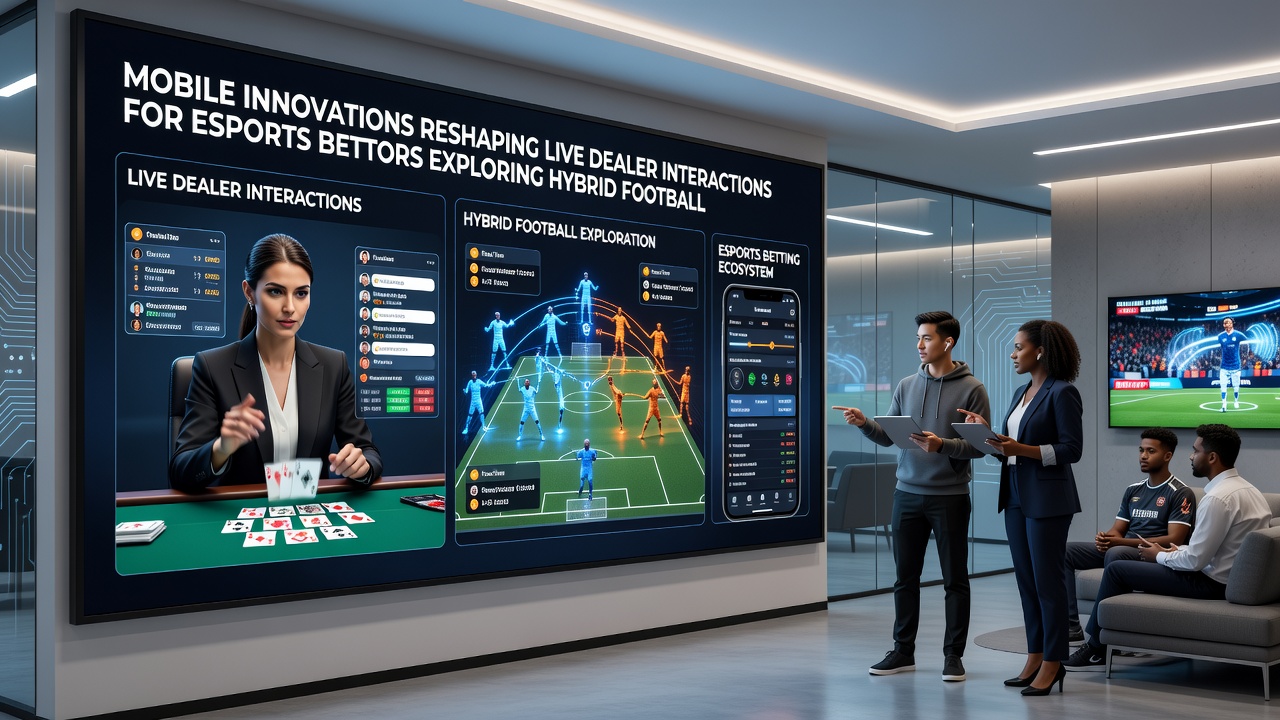
Live dealer software incorporates multi-angle video feeds that capture both the dealer and corresponding esports simulations, and these streams adapt to individual device orientations for optimal viewing. Bettors receive personalized incentive suggestions based on historical betting patterns stored securely within the app, yet all recommendations remain subject to jurisdictional compliance checks. Experts at the Canadian Gaming Association highlight that cross-sport hybrid models have expanded dealer interaction time by an average of 18 minutes per session when accessed via mobile compared with desktop alternatives.
Regulatory and Security Considerations in Mobile Environments
Government agencies across North America and Europe mandate encryption standards for mobile data transmitted during live dealer sessions, and compliance audits occur quarterly to verify protection of user information tied to hybrid football and tennis wagers. Mobile platforms integrate identity verification steps at login that align with these requirements, which reduces unauthorized access incidents according to aggregated industry statistics. In August 2026, several operators introduced updated compliance modules that flag potential conflicts between incentive structures and local gaming rules before bets finalize.
Third-party testing laboratories evaluate mobile app performance under peak loads, confirming that live dealer interactions maintain stability even when thousands of esports bettors simultaneously explore hybrid options. These evaluations cover everything from audio synchronization to incentive payout accuracy, and results feed into public transparency reports issued by trade organizations.
Future Developments and Industry Patterns
Analysts project continued expansion of wearable integration that will extend mobile dealer access to smartwatches and augmented reality glasses, thereby broadening participation in hybrid football and tennis incentives. Current patterns indicate that operators prioritize backward compatibility so older devices retain core functionality while newer hardware unlocks advanced visual effects. Research institutions continue to publish studies on user behavior within these environments, providing datasets that inform both product updates and policy refinements worldwide.
Conclusion
Mobile innovations continue to redefine how live dealers engage esports bettors through hybrid football and tennis incentives, supported by measurable advances in connectivity, security protocols, and interface design. Data from multiple regulatory and academic sources document rising participation rates and session durations that reflect these technical improvements. Operators maintain focus on compliance and performance testing to sustain reliable experiences across global markets into late 2026 and beyond.